

By: Favour Idoniboye-Obu
At exactly 02:02 on February 2, 2020, social media users around the world paused to admire the date’s symmetry. It read the same forward and backward, a rare calendrical palindrome that transformed an ordinary Sunday into a global linguistic celebration. Screenshots circulated rapidly, captions expressed delight, and timelines filled with commentary on numerical balance.
For many, it was simply a charming coincidence. For language scholars, writers, and communication experts, however, it was a reminder of something deeper: human beings are instinctively drawn to patterns, especially when those patterns disrupt routine perception. That moment of collective fascination offers an entry point into the study of palindromes and emordnilaps—two forms of reversible language that demonstrate how meaning can either remain intact or shift dramatically when letters are read in reverse.
A palindrome is a word, phrase, or sequence that reads identically forward and backward. Familiar examples such as “level,” “radar,” “madam,” and “civic” often appear in elementary language exercises, yet their structural precision continues to intrigue scholars. The attraction lies not in complexity but in symmetry.
Mr. David Baderin, a linguist, explains that this appeal is rooted in cognitive processing. “When people encounter a palindrome, their brains immediately recognize the symmetry,” he said. “That recognition creates satisfaction because the structure feels complete and balanced.”
According to Baderin, palindromes are valuable not merely as curiosities but as tools for understanding morphology and orthographic structure. “They force us to pay attention to letter arrangement. You cannot construct or even identify a palindrome without becoming conscious of linguistic form,” he added.
The intellectual discipline required to create extended palindromes further illustrates their sophistication. Sentences such as “Madam, I’m Adam” or “A man, a plan, a canal: Panama!” are frequently cited examples, yet they represent meticulous construction rather than spontaneous invention. Crafting such sequences demands careful selection of vocabulary, syntactic flexibility, and strategic punctuation. What appears playful is in fact methodical.
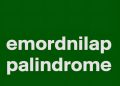
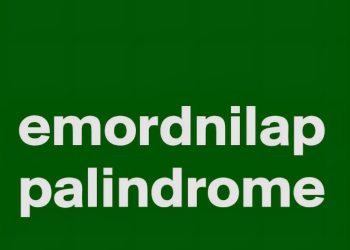
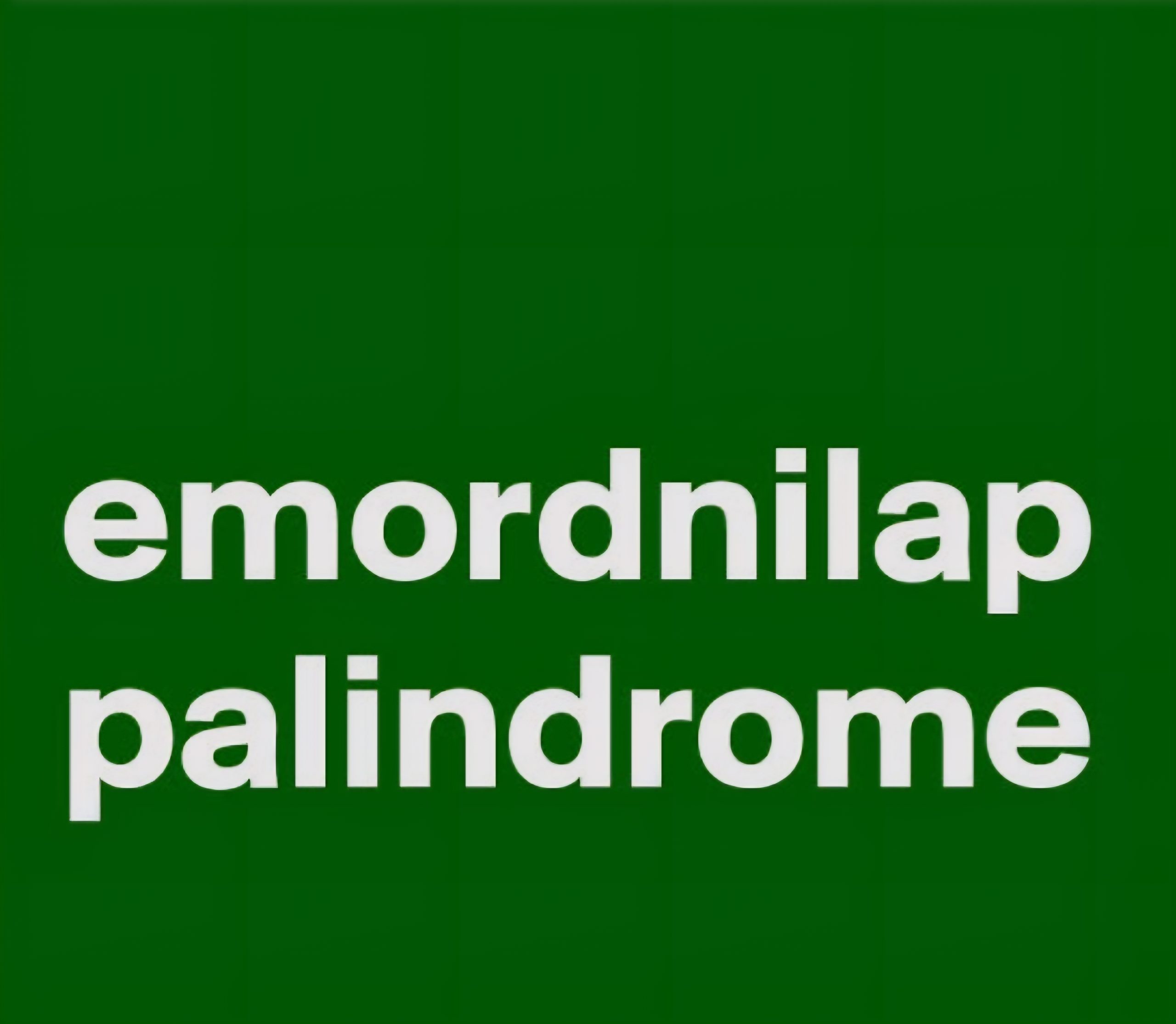
Palindromes therefore sit at the intersection of art and analysis, revealing that creativity in language operates within structural boundaries. If palindromes represent stability, emordnilaps embody transformation. An emordnilap—interestingly, “palindrome” spelled backward—refers to a word that becomes a different valid word when reversed. Examples such as “live” and “evil,” “drawer” and “reward,” or “stressed” and “desserts” illustrate how a simple inversion can generate entirely new semantic territory.
Unlike palindromes, which preserve identity, emordnilaps disrupt it. The result is often surprising, occasionally humorous, and sometimes metaphorically suggestive.
Mr. Baderin emphasizes that emordnilaps highlight the fragility and precision of linguistic systems. “A minor alteration in sequence produces a major shift in meaning,” he explained. “That fact underscores how structured language truly is. Every letter carries functional weight.” From a linguistic perspective, emordnilaps offer insight into how orthography, phonology, and semantics intersect. They remind readers that meaning is not inherent in letters alone but in their arrangement.
For creative practitioners, reversible language carries aesthetic implications. Kay Adeyemi, a creative writer, views palindromes and emordnilaps as demonstrations of artistic elasticity.
“Language is an artistic tool,” he said. “The right words bring stories to life and make writing more engaging.” Adeyemi argues that awareness of such patterns sharpens a writer’s sensitivity to diction and rhythm.
“When you understand that reversing a word can preserve or transform meaning, you become more deliberate in choosing expressions,” he noted. According to him, even when authors do not explicitly employ palindromes or emordnilaps, familiarity with them cultivates precision. “It teaches discipline. You begin to see vocabulary not just as content, but as material you can sculpt.”
Adeyemi also observes that emordnilaps sometimes generate unintended symbolism. “Take ‘stressed’ and ‘desserts,’” he said. “Readers laugh because the pairing feels psychologically true, even though it is coincidental.” Such examples illustrate how audiences participate in interpretation, projecting narrative meaning onto structural happenstance. This interaction between structure and perception reinforces the creative potential embedded in linguistic form.
Beyond literary circles, reversible constructions have implications for media practice. Mr. Ridwan Ahmed, a mass communication specialist, situates wordplay within the broader framework of audience engagement. “Effective communication depends greatly on word choice,” he stated.
“Creative and clear language helps messages connect better with the public.” In contemporary information environments characterized by rapid consumption and limited attention spans, linguistic ingenuity can distinguish one message from another.
Read more
•LIFE IN THE NORTH: Beyond the Stereotypes, Debunking the Myths About Northerners
Ahmed argues that carefully crafted phrasing enhances memorability. “When language feels intelligent yet accessible, audiences respond positively,” he explained. “Wordplay captures attention without sacrificing clarity.”
Ahmed further contends that reversible expressions metaphorically reflect the dynamics of public discourse. “In media, perspective determines interpretation,” he said. “If you reverse the angle, you may reverse the meaning. Emordnilaps illustrate that principle perfectly.”
From this standpoint, reversible vocabulary becomes more than entertainment; it models the fluidity of interpretation inherent in mass communication. The same sequence of letters, rearranged, produces divergent implications—much like a headline reframed for a different context.
Historically, reversible patterns are far from modern inventions. The Latin Sator Square, an ancient word square reading identically in multiple directions, demonstrates that symmetrical constructions fascinated early civilizations. Medieval scribes experimented with mirrored inscriptions, while poets across cultures incorporated palindromic devices into verse. The persistence of these forms suggests a universal human inclination toward structural harmony and playful manipulation.
Cognitively, engaging with reversible expressions activates analytical reasoning. Because reading typically follows a linear trajectory, encountering mirrored sequences disrupts automatic processing. This disruption encourages closer examination.
Mr. Baderin explains, “When readers identify a palindrome or emordnilap, they momentarily step outside habitual reading patterns. That pause increases awareness of structure.” Such awareness can strengthen literacy by fostering attentiveness to spelling, morphology, and semantic nuance.
In digital culture, interest in these phenomena resurfaces periodically, particularly during palindromic calendar dates. Online platforms amplify collective appreciation, transforming isolated curiosities into shared experiences. The viral spread of symmetrical dates demonstrates that fascination with mirrored structures transcends academic boundaries. It appeals simultaneously to scholars, writers, communicators, and casual observers.
Despite their apparent simplicity, palindromes and emordnilaps illuminate broader truths about linguistic architecture. They reveal that stability and transformation coexist within the same system. One arrangement preserves identity under reversal; another produces divergence. Together, they illustrate the delicate balance between order and variability that defines human language.
The perspectives of Mr. David Baderin, Kay Adeyemi, and Mr. Ridwan Ahmed collectively underscore this duality. Baderin situates reversible constructions within structural analysis, emphasizing their cognitive and grammatical significance. Adeyemi interprets them as instruments of artistic refinement, capable of deepening expressive craft. Ahmed frames them within communicative strategy, highlighting their capacity to enhance engagement. Each viewpoint converges on a central insight: attentive language use enriches understanding.
Reversible language ultimately challenges readers to reconsider assumptions about ordinary vocabulary. What appears static may conceal symmetry; what seems familiar may conceal transformation. By examining palindromes and emordnilaps, one discovers that linguistic meaning depends as much on arrangement as on content. In that discovery lies both intellectual rigor and creative delight.
The next time a symmetrical date appears on a calendar or a reversed word produces unexpected significance, the reaction may extend beyond casual amusement. It may instead prompt reflection on the intricate architecture underlying everyday expression. In mirrored sequences and inverted pairings, language reveals its capacity for both equilibrium and change—a reminder that even the simplest arrangement of letters can contain remarkable depth.